Why Acquiring and Upgrading Existing Hotels Creates Long-Term Value
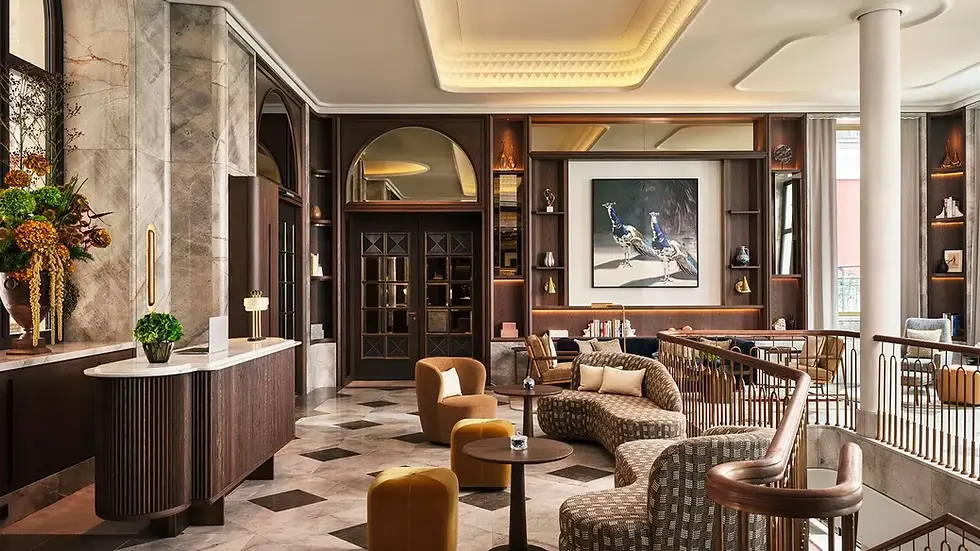
Across Europe’s leading city markets, the most compelling boutique hotel opportunities are increasingly found not in new construction, but in existing hotel assets that require upgrading and repositioning.
Rising construction costs, extended delivery timelines, and planning complexity have made ground-up development more challenging. At the same time, many well-located hotels continue to underperform due to outdated design, inefficient layouts, or concepts no longer aligned with today’s traveller.
For a boutique hotel brand with a long-term operating focus, acquiring and upgrading these assets offers a clear path to value creation — combining location strength with thoughtful reinvention.
The Strategic Advantage of Existing Hotel Assets
Established hotels often occupy locations that are no longer replicable: historic city centres, cultural districts, or highly walkable urban neighbourhoods. These assets benefit from:
Proven demand fundamentals
Established visibility within their market
Existing planning and zoning certainty
Immediate integration into the city’s fabric
While performance may lag, this is rarely due to location. More often, it reflects misalignment between the asset and modern guest expectations.
For boutique hotel brands, this creates opportunity — not to replace the asset, but to refine it.

Why Upgrading Often Outperforms New Development
Upgrading an existing hotel allows capital to be deployed with greater precision and lower execution risk than ground-up construction.
Key advantages include:
Shorter project timelines and faster return to operation
Reduced construction uncertainty where structure and infrastructure are retained
Greater confidence in demand, supported by historical trading data
For a brand focused on owning and operating hotels, this approach enables earlier stabilisation and clearer performance visibility — both critical to long-term success.
Repositioning Hotels for the Boutique Experience
Many hotels were designed for a different era of travel. Common challenges include:
Room layouts that prioritise quantity over quality
Underutilised public spaces
Generic interiors lacking local character
Operational inefficiencies behind the scenes
Through targeted upgrading, these assets can be repositioned into boutique hotels that reflect their location, story, and surroundings.
Effective repositioning focuses on:
Improving spatial flow and guest comfort
Creating distinctive public and social spaces
Aligning design with the culture of the city
Enhancing operational efficiency to support long-term performance
When done well, this leads to stronger ADR, improved RevPAR, and a more resilient mix of demand — driven by experience rather than scale.

Operating With a Long-Term Perspective
As a boutique hotel brand, Argyle Boutique Hotels is focused on owning, upgrading, and operating hotels, not short-term repositioning for exit.
This long-term operating mindset influences every stage of decision-making:
Design choices that prioritise durability and longevity
Materials selected for both aesthetic and lifecycle performance
Layouts that support efficient day-to-day operations
Experiences designed to remain relevant beyond initial opening
This approach is informed by development and project delivery experience gained through Argyle Developments, but applied specifically to the realities of hotel ownership and operation.

A Clear Opportunity for Investors
For investors aligned with boutique hospitality, this model offers:
Entry into prime urban locations without new-build risk
Capital deployment focused on tangible improvement rather than speculation
Assets operated with a long-term brand and ownership perspective
Exposure to hotels designed to age well, not chase trends
By acquiring assets with strong fundamentals and upgrading them with discipline and intent, boutique hotel brands can create enduring value — both financially and experientially.
Final Thought
Well-located hotels rarely lose their relevance. What they lose over time is alignment — with contemporary travel behaviour, design expectations, and operational best practice.
Acquiring and upgrading existing hotels allows that alignment to be restored. For boutique hotel brands committed to ownership and operation, it represents a measured, resilient, and opportunity-driven path to growth.


Comments